

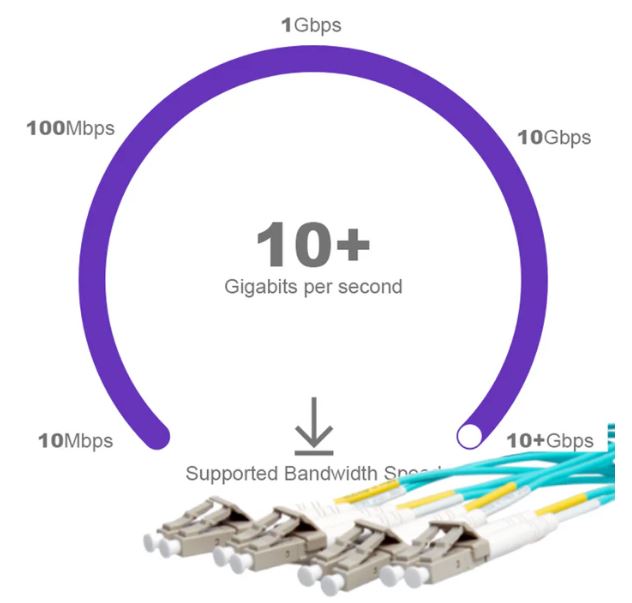
Network Speed Test: Calculating Required Bandwidth by Signal Type
Not all communication cables are created equally. And depending on the cable pulled throughout your building, your infrastructure might not support the devices of today and tomorrow.
This article explores the supported bandwidth of different low voltage cable types, as well as the bandwidth requirements of common network-connected devices and signal formats.
Standard Twisted Pair Cable
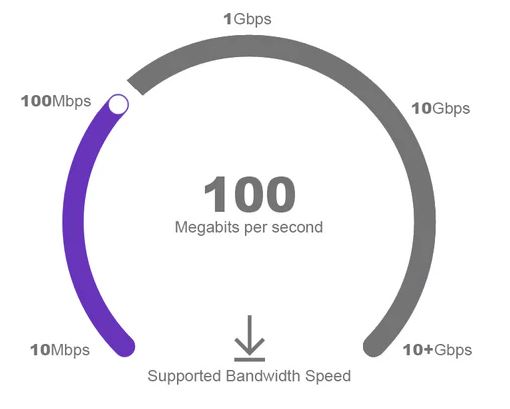
0 – 100Mbps. Standard Cat 5 cable supports a maximum transmission bandwidth of 100Mbps, far below the need of commonly used network and AV devices.
Enhanced Twisted Pair Cable
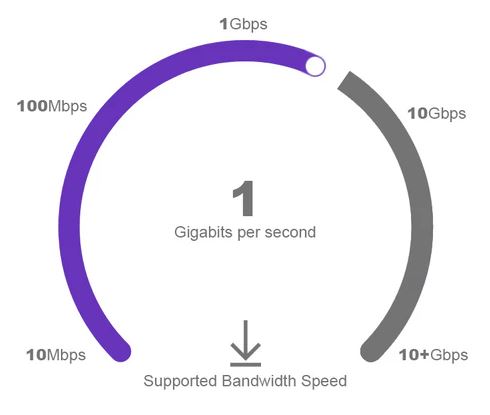
100Mbps – 1000Mbps. Cat 6 cable supports varying bandwidth and performance depending on the cable distance and path. Short cable lengths (under 50m) can reach speeds over 1G; however, interference will greatly reduce performance.
Fiber Optic Cable
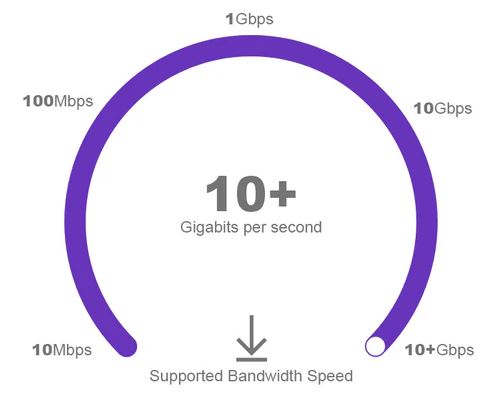
1000Mbps+. Fiber easily exceeds 10G and, depending on the connected electronics, can deliver up to 10,000 times more bandwidth than twisted pair. Plus, it’s immune to all sources of interference.
Network Requirements by Device
Different devices have different network bandwidth requirements. The below chart lists commonly used devices and the minimum required bandwidth per concurrent stream. Actual consumption may vary slightly based on the make and model of the device, as well as the streamed signal format.
| Signal / Device | Minimum Required Bandwidth per Concurrent Stream |
| Streaming Music | 1Mbps |
| IP Phone | 1Mbps |
| Video Doorbell | 2Mbps |
| IP Security Camera | 2Mbps |
| Online Video Gaming | 6Mbps |
| Streaming Standard Video | 5Mbps |
| Streaming 4K Video | 25Mbps |
| Streaming 8K Video | 60Mbps |
| General Web-enabled Devices | 0.2Mbps |
It is possible to calculate the total bandwidth load on a network by calculating the total number of concurrent devices and their minimum bandwidth draw.
For example, we can calculate the load for a typical home as follows:
| Signal / Device | Number of Concurrent Streams | Minimum Required Bandwidth per Concurrent Stream | Total Required Bandwidth |
| Streaming Music | 2 | 1Mbps | 2Mbps |
| IP Phone | 4 | 1Mbps | 4Mbps |
| Video Doorbell | 1 | 2Mbps | 2Mbps |
| IP Security Camera | 8 | 2Mbps | 16Mbps |
| Online Video Gaming | 1 | 6Mbps | 6Mbps |
| Streaming Standard Video | 1 | 5Mbps | 5Mbps |
| Streaming 4K Video | 4 | 25Mbps | 100Mbps |
| Streaming 8K Video | 1 | 60Mbps | 60Mbps |
| General Web-enabled Devices | 45 | 0.2Mbps | 9Mbps |
Assuming all devices are used concurrently, the minimum bandwidth required for this home is 199Mbps. However, in real application, devices have variable use patterns and signal loads. It’s very common to see signal spikes, especially when streaming media.
At a minimum, this infrastructure requires enhanced twisted pair cable; however, longer cable runs and native video transmission will benefit from fiber optic cable.
4K and 8K video may only require 25 – 60Mbps for streaming; however, they require 18 – 48Gbps once downloaded. Native, uncompressed ultra high-definition video requires a fiber optic connection.